
Team & Culture
Understanding The DISC Personality Model: A Guide To The 4 Behavioral Styles
Savage Strategy Co
Have you ever wondered why some people dive headfirst into decisions while others take their time to analyse every detail? Or why certain colleagues thrive in social settings while others prefer to work quietly behind the scenes? The answer often lies in personality — and the DISC model gives us one of the clearest, most practical frameworks for understanding it.
What Is the DISC Model?
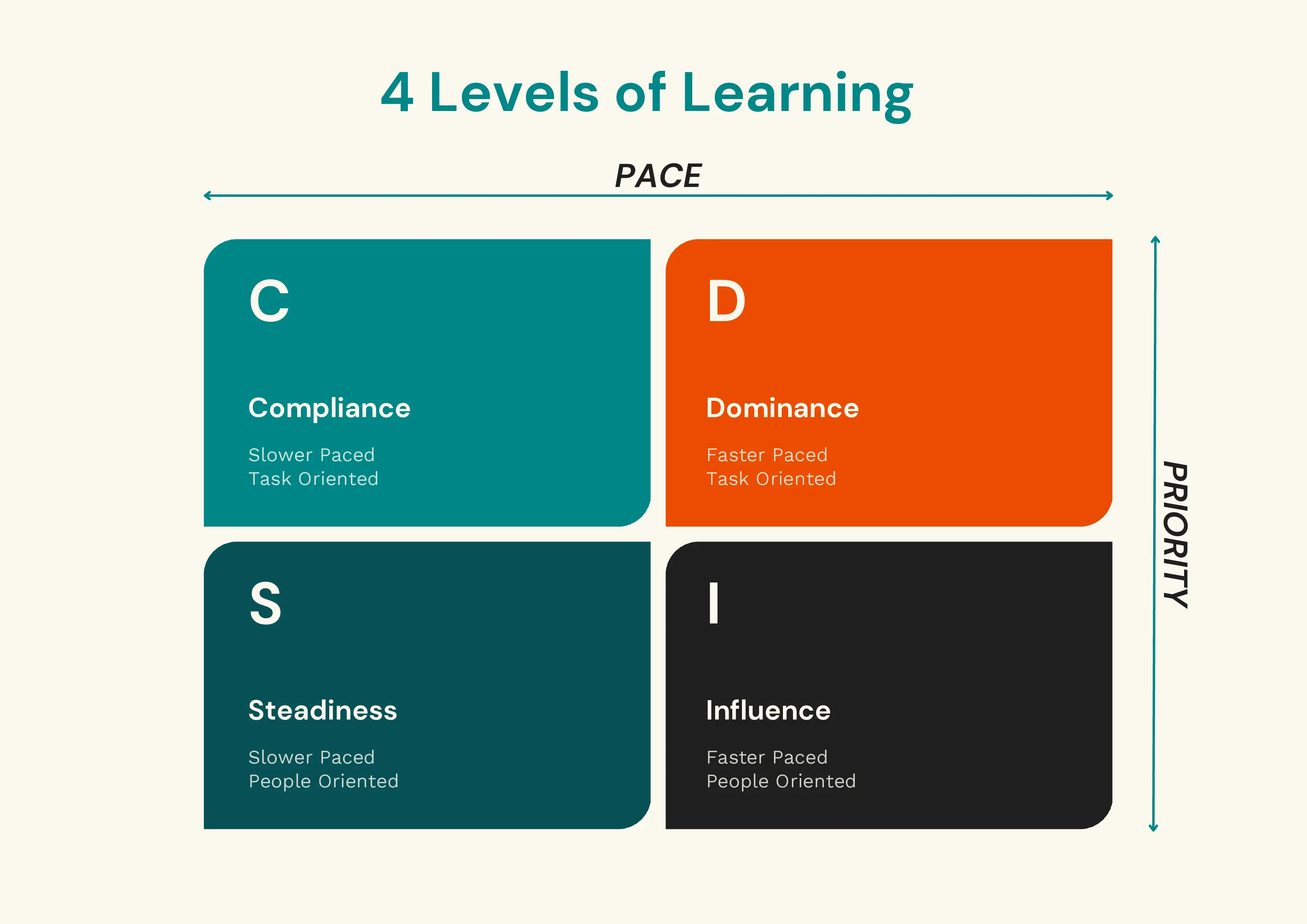
The DISC model is a behavioural assessment tool that categorises human personality into four core styles: Dominance (D), Influence (I), Steadiness (S), and Compliance (C). Originally developed by psychologist William Moulton Marston in the 1920s and later refined into assessments used worldwide, DISC has become a go-to framework in leadership development, team building, sales training, and personal growth.
The model maps these four styles across two key dimensions:
- Pace — ranging from Slower Paced to Faster Paced
- Priority — ranging from Task Oriented to People Oriented
Understanding where you and your colleagues fall on this matrix can be genuinely transformative.
The Four DISC Personality Styles Explained
D — Dominance (Faster Paced, Task Oriented)
People with a Dominance personality are driven, decisive, and results-focused. They move fast, make quick decisions, and aren’t afraid to take charge. You’ll often find them in leadership roles, setting ambitious goals and pushing hard to achieve them.
- Key traits: Confident, competitive, direct, determined
- Challenge: Can come across as impatient or dismissive of others’ feelings
- Best suited for: Executive roles, entrepreneurship, project leadership
I — Influence (Faster Paced, People Oriented)
The Influence type is the life of the party — enthusiastic, persuasive, and naturally social. They excel at motivating others, building relationships, and generating excitement around ideas. Their energy is contagious, making them effective communicators and collaborators.
- Key traits: Optimistic, expressive, sociable, creative
- Challenge: May struggle with follow-through on detail-oriented tasks
- Best suited for: Sales, marketing, public relations, coaching
S — Steadiness (Slower Paced, People Oriented)
Steadiness types are the dependable backbone of any team. They value harmony, consistency, and meaningful relationships. They prefer a stable, collaborative environment and are often the ones who listen deeply and support others through change.
- Key traits: Patient, loyal, empathetic, reliable
- Challenge: May resist change or avoid conflict even when it’s necessary
- Best suited for: HR, counselling, support roles, team coordination
C — Compliance (Slower Paced, Task Oriented)
The Compliance personality is the detail-master of the group — analytical, methodical, and precise. They ask the hard questions, check their work twice, and bring rigour and accuracy to everything they do. Rules, standards, and quality matter deeply to them.
- Key traits: Accurate, systematic, logical, quality-driven
- Challenge: Can be overly critical or slow to act without sufficient data
- Best suited for: Finance, engineering, data analysis, quality assurance
Why DISC Matters in the Workplace
Understanding DISC styles isn’t about putting people in boxes — it’s about improving communication, reducing friction, and maximising each person’s strengths. When teams understand their own styles and those of their colleagues, they can:
- Communicate more effectively by adapting their approach to the listener
- Resolve conflicts faster by recognising style clashes rather than personal attacks
- Build more balanced teams by intentionally mixing complementary personality types
- Lead more empathetically by knowing what motivates each individual
How to Use DISC in Practice
1. Start with yourself. Take a DISC assessment (many are available online) to identify your primary style. Most people are a blend of two styles.
2. Learn to recognise others’ styles. Pay attention to how people communicate, make decisions, and handle conflict — these are strong signals of their DISC profile.
3. Adapt your communication style. With a D, be brief and results-focused. With an I, bring energy and enthusiasm. With an S, take your time and show you care. With a C, come prepared with data and logic.
4. Build diverse teams. A team of all D’s may move fast but miss the human element. A team of all S’s may be harmonious but slow to innovate. Intentional diversity of styles leads to better outcomes.
The DISC model offers a powerful, practical lens for understanding human behaviour. Whether you’re a manager trying to get the best out of your team, a salesperson looking to connect with clients more effectively, or simply someone who wants to understand themselves better — the four DISC styles are an invaluable tool.
The key insight is simple: people are different, and those differences aren’t flaws — they’re features. When we learn to appreciate and work with diverse personality styles rather than against them, we unlock the full potential of every team and every relationship.
Keep reading:

Ready to Find Out What Is Holding Your Business Back?
Book a 30-minute strategy conversation with Andrew. No sales pressure, no programme pitch. Just a direct conversation about where your business is and what the real constraints are.Book a 30-minute strategy conversation with Andrew.
No sales pressure, no programme pitch. Just a direct
conversation about where your business is and what
the real constraints are.